29
points
padolsey
Joined 4,085 karma
padolsey.at.hn
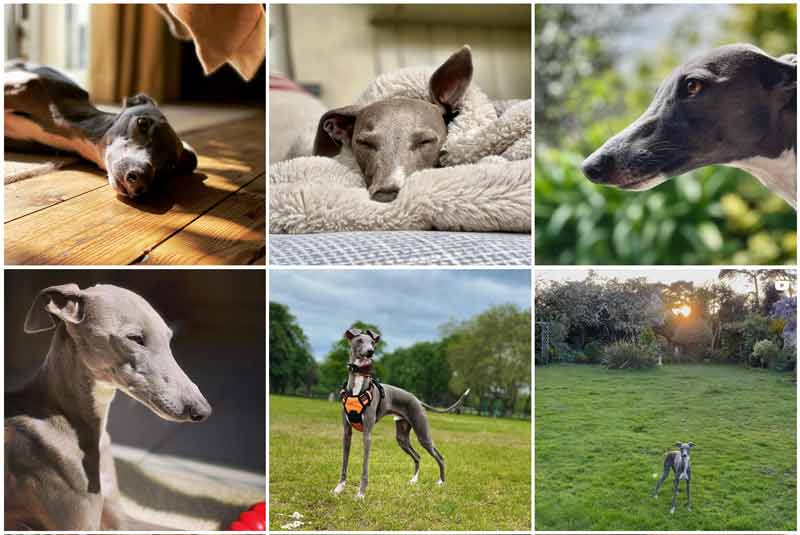
I'm James. Living between Beijing and London. I like coding. Also plants. Stroke survivor & disability advocate. My dog's a whippet/iggy cross and is called Ducky. He's a beautiful lunatic.
* website: [j11y.io](https://j11y.io) * building: [xmllm](https://xmllm.j11y.io) * bsky: [@j11y.io](https://bsky.app/profile/j11y.io) * contact: https://tally.so/r/waYPvE * mastodon: [@james@angelou.club](https://angelou.club/@james) * twitter: [@padolsey](https://x.com/padolsey) * book recommendations: [ablf.io](https://ablf.io) * me = founding eng @ [collective intelligence project](https://cip.org)
My work email is my first name at cip dot org.
---
---
My meet.hn token: meet.hn-10d164d4-bf7f-4431-898f-e02b34b836dc
- I agree that there will be no single call or inference that presents malice. But I feel like they could still share general patterns of orchestration (latencies, concurrencies, general cadences and parallelization of attacks, prompts used to granulaize work, whether prompts themselves have been generated in previous calls to Claude). There's a bunch of more specific telltales they could have alluded to. I think it's likely they're being obscure because they don't want to empower bad actors, but that's not really how the cybersecurity industry likes to operates. Maybe Anthropic believes this entire AI thing is a brand new security regime and so believe existing resiliences are moot. That we should all follow blindly as they lead the fight. Their narrative is confusing. Are they being actually transparent or transparency-"coded"?
- > PoC || GTFO
I agree so much with this. And am so sick of AI labs, who genuinely do have access to some really great engineers, putting stuff out that just doesn't pass the smell test. GPT-5's system card was pathetic. Big-talk of Microsoft doing red-teaming in ill-specified ways, entirely unreproducable. All the labs are "pro-research" but they again-and-again release whitepapers and pump headlines without producing the code and data alongside their claims. This just feeds into the shill-cycle of journalists doing 'research' and finding 'shocking thing AI told me today' and somehow being immune to the normal expectations of burden-of-proof.
- To this day I hate captchas. Back when it was genuinely helping to improve OCR for old books, I loved that in the same way I loved folding@home, but now I just see these widgets as a fundamentally exclusionary and ableist blocker. People with cognitive, sight, motor, (and many other) impairments are at a severe disadvantage (and no, audio isn't a remedy, it is just shifting to other ableisms). You can add as many aria labels as you like but if you're relying on captchas, you are not accessible. It really upsets me that these are now increasing in popularity. They are not the solution. I don't know what is, but this aint it.
- I dunno. A competent human can hold the a mental image and work through it. Not too hard with experience. What I generally mean tho is: I don't think we can state the supreme capabilities of AI (which people love to do with grate fervour and rhetoric) until they can at the very least draw basic objects in well-known declarative languages. And while it may be unwise to judge an AI based on its ability to count the number of 'R' letters in various words, it -- amongst a wider suite ofc -- remains a good minimum threshold of capability.
- I help run an eval platform and thought it fun to try a bunch of models on this challenge [1].
There's some fun little ones in there. I've not idea what Llama 405B is doing. Qwen 30B A3B is the only one that cutely starts on the landscaping and background. Mistral Large & Nemo are just convinced that front shot is better than portrait. Also interesting to observe varying temperatures.
I feel like this SVG challenge is a pretty good threshold to meet before we start to get too impressed by ARC AGI wins.
[1] https://weval.org/analysis/visual__pelican/f141a8500de7f37f/...
- I mean, almost anything would be better. But here's my swing:
> I'm so sorry about this. We definitely screwed up here and want to > fix things. We want to chat to you in a call if you're able? > We will stop changing things, issue a moratorium on AI while we > figure things out. You and communities like yours are central to > our entire existence and purpose at Mozilla. - I agree, and this reminds me: I really wish there was better URL (and DNS) literacy amongst the mainstream 'digitally literate'. It would help reduce risk of phishing attacks, allow people to observe and control state meaningful to their experience (e.g. knowing what the '?t=_' does in youtube), trimming of personal info like tracking params (e.g. utm_) before sharing, understanding https/padlock doesn't mean trusted. Etc. Generally, even the most internet-savvy age group, are vastly ill-equipped.
- For something a bit simpler I made redoku a while ago: https://padolsey.github.io/redoku/
- Thanks for sharing! I feel the fear of another attack with epilepsy too. It is terrifying. The doom and the walking on thin ice constantly hoping you're not gonna over-step or do the wrong thing. And all that at the same time as trying to live your life fully. Do you have any devices or aid software to help with the not-reading thing? I imagine it's all really fresh still and you're just taking it a day at a time?
- > when I got dragged into a project that was sufficiently interesting that I started overworking
This is what bites. I have some really narrow interest areas that I can end up being obsessive about, to my own detriment. We have to be careful.
Glad you didn't lose mobility and speech! I also feel lucky. I met others in neuro-rehab in far worse situations. For three months I couldn't walk and now thankfully do so with a stick and ankle brace. The hard stuff isn't the stuff you can see visually though. People see my floppy leg, and might presume that's the main thing, but nope. The big thing is the epilepsy, this constant monster present in the background. It's the invisible stuff that's often hard.
- 505 points
- What concerns me most in the era of gen AI irt photography is journalism. We need truth, most especially when limited-means citizen journalism is the only reliable source of that truth.
But I feel like the only way to accomplish fool-proof photos we can trust in a trustless way (i.e. without relying on e.g. the Press Association to vet) is to utterly PACK the hardware with sensors and tamper-proof attestation so the capture can’t be plausibly faked: multi-spectral (RGB + IR + UV) imaging, depth/LiDAR, stereo cameras, PRNU fingerprinting, IMU motion data, secure GPS with attested fix, a hardware clock and secure element for signing, ambient audio, lens telemetry, environmental sensors (temperature, barometer, humidity, light spectrum) — all wrapped in cryptographic proofs that bind these readings to the pixels.
In the meantime however, I'd trust a 360deg go-pro with some kind of signature of manafacture. OR just a LOT of people taking photos in a given vicinity. Hard to fake that.
- Beautiful images in some ways, but so raw and stomach-churning in others. I am not American but feel sick to this day at the thoughts of these events. On the day of 9/11, I was 11 and went to my IT class that afternoon in Sussex, UK. Our teacher set a task that we thought was hypothetical. They said something had happened in NYC and asked for us to put our investigative hats on and find information about it online. I suppose, in a way, it made sense as a task, to treat it as an exercise. It slowly came to realization that this was a real thing. Looking at these images now, the people in the foregrounds in 1970s attire, going about their days, it feels like a nostalgic optimism. Earth-shattering loss followed it. The ephemerality of optimism for our pockets of lived humanity in this lifetime are not to be taken for granted. We should remember and value what positive and pain-free times we are able to each be priveleged enough to enjoy. Time is short.
All-lowercase comes accross as the text equivalent of a hoodie and jeans: comfortable, a bit defensive against being seen as trying too hard, and now so common it barely reads as rebellion.