I read lots of these kinds of "grad school isn't worth it" confessionals. But many were about humanities PhDs, not STEM. And I thought I was special, above average, even maybe a genius. And I was special, but apparently not special enough. I dropped out to work in tech and have a better salary and life than my few ex classmates in my program who did make it in academia.
But one of my housemates was a humanities PhD who also started at 22, and was smarter and a harder worker than any of us STEM PhD students. We all thought that if any of us deserved to make it in academia, it was him. But the humanities are shrinking in the academy. What the article describes is his current life. An PhD from an R1 university who can only find a patchwork of adjunct positions at different 2 year community colleges. He can't go work in tech, who is going to pay a historian six figures or even a living wage? He got some work doing freelance writing and editing, mostly helping college applicants with their essays, but ChatGPT is destroying the freelance writing market.
We all made these decisions at age 22, after spending 4 very formative years in college. I made the same stupid decision he did and mine worked out, but the intellectual bug that bit me just so happened to be infinitely more valuable to industry than the one that bit him.
Or taking business advice from successful entrepreneurs. Everyone is looking for the magical advice—The Formula. But there is none. You can execute perfectly and still lose. You can also bumble through without trying and succeed. You can grow up in the wrong country. You can have the right parents. So much is out of our control. We almost always underestimate the outsized role luck and chance play in our endeavors.
As someone very close to this area, I seriously question this. Yes, there are very low-rent content mills with material being cranked out by people who are being paid pennies per word. But serious freelance writing being commissioned by many corporations (where the pay is more in line with $1/word) are not going to be replaced by ChatGPT anytime soon. The writers may use ChatGPT as an assistant and perhaps rates will decline further over time but this basically falls in the same category as we won't need programmers any longer.
Maybe? But now you're in the category of AI will take all the jobs.
ChatGPT doesn't even need to be nearly as good as the writers it replaces for those writers to lose their jobs. It just has to be good enough that the people who write the cheques can't tell the difference, and such people don't all have a good eye for quality writing.
I appreciate the thinking that went into the parent post, but I want to challenge this statement, which is emblematic of the kind of reasoning that paints training in the humanities as frivolous and out of touch with the demands of the market, as if the market is the sole arbiter of reality.
I recently earned a PhD in a humanities field, and I'm currently gainfully employed as a research software engineer at a major university. I'm making less than I did when I was in tech just out of college, but more than many of my humanities colleagues in various positions between the PhD and the tenure track.
My point is not to brag about being able to get into tech with a humanities background, but to say that I don't think I'm anything special. When I was first applying for tech jobs out of college, I drew on my training in literature and human languages to guide my learning and application of CS fundamentals. I admit that I caught a lucky break with companies willing to take a chance on someone with a non-traditional background, and I'm grateful to have these skills to draw on if a traditional academic career doesn't work out for me. But I think my story is repeatable.
But back to the original point: rather than denigrating the value of a history PhD, it's important to question the market forces that have created this kind of precariousness for people who possess not only important knowledge about the past but, more importantly, the training and skills to use that knowledge to interpret the present.
The assumption that jobs are available to people because of what they _know_ is based on faulty logic that comes from the MBA-ification of everything -- the obsession with "deliverables."
Really, what PhD training in any discipline brings is both a deep pool of knowledge and the training to synthesize and use those "facts" in novel ways.
> ChatGPT is destroying the freelance writing market
Relatedly, this statement only makes sense if one assumes that we have given up on teaching everyday people -- non-specialists -- the importance of the medium for a message's delivery, dissemination, and broader understanding. "ChatGPT is destroying the freelance writing market" because we have collectively failed to reinforce the value of human perspectives on an issue.
Allowing "The Market" to dictate reality has led to schisms in shared truth like climate change denialism. We need interpreters of history, literature, drama, etc. in order to get back to any hope of getting back to broad agreement about what the world is.
Will we ever get everyone to agree? Of course not, but market forces can't repair these divisions.
As the old Upton Sinclair quote goes, "It is difficult to get a man to understand something, when his salary depends on his not understanding it."
If a skill isn't needed, there won't be a demand for it, and it won't pay well, no matter how many years of learning and personal growth are required to acquire the skill.
The big bad market refusing to pay historians a good wage is just society's built-in mechanism for trying to guide people into doing things that are most needed.
A lot of the humanities were historically aimed at rich kids who don't need to engage with the labour market; we really shouldn't be encouraging middle-class kids to take on a mountain of student debt when they should be focusing on maximizing their earnings.
You start off correctly; markets are "part of reality". That rightly implies some other "rest of reality", does it not?
You then define all value only within the limited logic of markets. And wish to a universalise it as "society's built-in mechanism".
Mathematics is a "humanity". Reading some, you'll gain understanding of Gödel, Whitehead and Russell who would alert you to the logic that a system can't deal with what's outside itself.
Markets are a system. A very simplified one.
Humanities are precisely that project that transcends simple models like markets. Humanities attempt to cover a bigger, meta-reality. It has nothing to do with "rich kids". Some of the greatest philosophers, writers and scientists (what we call 'STEM' now was once "natural philosophy") were dirt poor.
To be more frank, to think only about markets and "maximising earnings" is stubborn, insular and self-limiting. It's a great way to stay cloistered and never contribute anything of value to the world.
Sure we have professional economists. But not everyone should reduce them-self to the level of economics.
[0] EDIT: these are not words meant to insult or belittle - they are to mean exactly what they mean on face value. There is no 'shame' in thinking with limited horizons, or seeing in an involuted way if you've been exposed to nothing else but are open minded to imagine there is more to the world.
Not all value, just monetary one. There's plenty of valueable activities that do not pay much or even a dime. However, the discussion revolved about making a living, not what's valueable in the abstract. And, regarding making a living, it's true that plenty more people want to be paid as historians that other people have a need for.
I do think my career stalled a bit as a result of studying these things, but that's a consequence of the same market thinking you're challenging. The people who hired me are happy they gave me the chance, and presumably like OP said, we aren't that special and there are tons of other talented people who can do this work being ignored because of an excess concern for credentialism.
The lack of jobs for PhDs has been a trend for several decades. These guys are smart and are successful. They came from all different fields. And if they hadn't detoured into academia they would have had an extra 10-15 years of legal earnings (or the ability to retire that much sooner).
In 2016 I put up "Universities treat adjuncts like they do because they can" in response to one of them. https://jakeseliger.com/2016/02/25/universities-treat-adjunc.... Supply and demand.
So long as these things are enticing to enough people, supply will outstrip demand and wages will fall.
So, it is more accurate to say that academia gives professors the freedom to run their own research organization, but if that professor wants a good shot at getting tenure and staying in the good graces of the university, the professor needs to be mindful of the expectations that the university has placed and the requirements of funding agencies. Even if a professor is mindful of these things, research is inherently risky, and a professor runs the risk of not getting tenure due to research results and grant-earning efforts not meeting expectations.
This is distinct from the idea that a professor can do whatever research he or she wants. Theoretically this is true in the sense that there will be no manager watching over the professor’s shoulder, but if the professor isn’t meeting the university’s performance expectations for publications and grants, the professor won’t make tenure, and even post-tenure the university could find ways to make life difficult for the “unproductive” professor.
I’ve thought long and hard about this, and I personally believe that a professor actually has more freedom in predominantly teaching environments. At teaching-oriented universities, the publication and grant-earning requirements are typically lower than that of research universities. At all-undergraduate colleges, sometimes there are no expectations for research. Of course, reduced research requirements mean increased teaching requirements, which could be challenging for researchers who don’t have an interest or talent for teaching. But for those who love teaching and who want reduced or even non-existent “publish or perish” pressure, then a teaching-oriented institution is a great alternative. Even if one’s research is restricted to winter and summer breaks due to the workload of teaching, this certainly beats trying to do research as a hobby on nights and weekends while juggling a 9-5 job and only getting 2-4 weeks PTO per year.
There are plenty of folks that do private research on their own time. This is the right choice for the vast majority of folks that have the "bug".
Of course, the reality of research careers is quite different from the pursuit of research itself. They’re quite competitive, especially in fields that lack a lucrative industry, and there are many restrictions on freedom that many people aren’t aware of until they actually become researchers. I learned these realities the hard way, and I’m in the process of restructuring my life to where I can pursue research as a hobby rather than as a paid profession.
Of course, the hardest part about pursuing research as a hobby is making a living outside of it. If a person who wants to be a researcher is aware of this reality, then he or she could prepare by developing some marketable skill, product, or service and use that to make a living while devoting time outside of money-making to research. However, for those deep in research or academia who feel trapped in postdocs, adjunct positions, or other unfulfilling positions but who spent their who careers preparing for an elusive permanent research job without developing other skills, it can be a very painful transition, even if in the long run stubbornness results in an even more painful outcome.
Depends on the research field. For example, Einstein did some of his best work without any university affiliation.
The article itself is basically a direct description of how people are lured into academia with exactly that expectation, and then end up in the gig economy. Not "choosing" much of anything. The market says you're the academic equivalent of a taxi driver.
There are other locations to consider theory if theory's your thing.
Museums: support of archaeology, art analysis, sociology, geography, history. Ex: The British Museum, https://www.britishmuseum.org/research/projects
Aquariums/Zoos: Earth science, plants, genetics, ecology, animal science, zoology, microbiology, nutrition, pathology, physiology, medicine, conservation. Ex: Columbus Zoo and Aquarium, https://www.columbuszoo.org/science
NGOs and Foundations: Earth science, plants, genetics, ecology, astronomy, education, data science, sampling/measurements, foreign affairs, international politics, finance, economics, public outreach. Ex: The Carnegie Foundation and Sub-Foundations: https://en.wikipedia.org/wiki/Carnegie_Corporation_of_New_Yo...
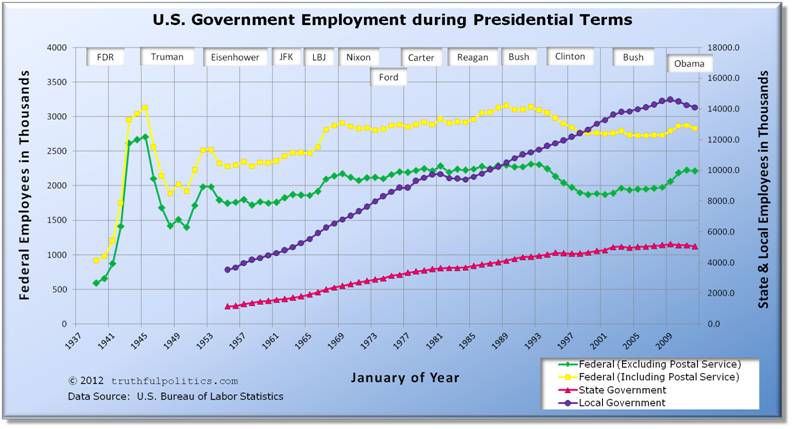
Gov: support of aeronautics, engineering, data science, computer science, forestry, agriculture, architecture, almost every hard science, economics, finance, law, even recreational specilists. [1] Feds have ~3M employees. States have ~5M employees. Local govs have ~14M employees. [2]
A lot of the jobs are workaday jobs, yet there's still a bunch out of ~22M that are somewhat "research". Formerly a contractor at NASA, and even for a contractor (not civil servant), seven publications. Mostly, minor citations, maybe 10-15, yet still, seven publications on research topics.
[1] https://www.usajobs.gov/help/working-in-government/unique-hi...
[1] http://www.truthfulpolitics.com/images/u-s-government-employ...